петак, 20. новембар 2015.

LEMUR

LEMUR


Lemurs are primates and prosimians (not monkeys). The word "lemur" comes from the Latin word lemures, which means "ghosts". This name refers to many of the nocturnal lemur species and their large eyes. Lemur may be any member of the four lemuriform families, but it is also the genus of one of the lemuriform species. There are two so-called flying lemurs, but they are not real lemurs.

Lemurs live only on the island of Madagascar and some smaller islands next to it, for example the Comoros. They weigh from 30g to the 10kg. Larger species have all become extinct since human groups moved to Madagascar. Usually, the smaller lemurs are active at night (nocturnal), and the larger ones are active during the day (diurnal).

Lemurs are white and black with a ring tail. They are about 1.5 meters tall and weigh about 2 to 3.5 kilograms. They move quietly, usually at night, sometimes letting out eerie wailing cries, which some people think is the reason why they got their names.


Lemurs mostly eat fruit, leaves, and other plant parts. They live in family groups of 5 to 42 members which is called a troop. Females are dominant and remain in the same troop for life. Males move between troops. The female's gestation period lasts four to five months, and they usually have between one and two babies. Lemur mothers nurse their babies until they are about four months old. Then they begin to feed the babies solid food such as fruit. Lemurs spend most of their time in the trees. Some are fantastic leapers, flinging themselves from tree to tree. Lemurs live for about 27 years.


Lemurs communicate with a variety of hoots. They will also send messages with scents (smells). When a male lemur wants to scare another male away, he first rubs its tail on the smelly glands under its arms and then waves the tail in the other male's face. These are called "stink fights".


Today, there are about 32-35 living lemur species. All lemurs are endangered species, because people destroy their habitat and hunt them.

Lavasoa dwarf lemur
Grey bamboo lemur
Ring-tailed lemur
Aye-aye
Black-and-white ruffed lemur
Silky sifaka


In addition to being listed as endangered in 2014 by the IUCN, the ring-tailed lemur has been listed since 1977 by CITES under Appendix I,which makes trade of wild-caught specimens illegal. Although there are more endangered species of lemur, the ring-tailed lemur is considered a flagship species due to its recognizability.


Three factors threaten ring-tailed lemurs. First and foremost is habitat destruction. Starting nearly 2,000 years ago with the introduction of humans to the island, forests have been cleared to produce pasture and agricultural land.Extraction of hardwoods for fuel and lumber, as well mining and overgrazing, have also taken their toll. Today, it is estimated that 90% of Madagascar's original forest cover has been lost. Rising populations have created even greater demand in the southwest portion of the island for fuel wood, charcoal, and lumber. Fires from the clearing of grasslands, as well as slash-and-burn agriculture destroy forests. Another threat to the species is harvesting either for food (bush meat) or pets. Finally, periodic drought common to southern Madagascar can impact populations already in decline. In 1991 and 1992, for example, a severe drought caused an abnormally high mortality rate among infants and females at the Beza Mahafaly Special Reserve. Two years later, the population had declined by 31% and took nearly four years to start to recover.


четвртак, 19. новембар 2015.

SPIDER MONKEY

SPIDER MONKEY


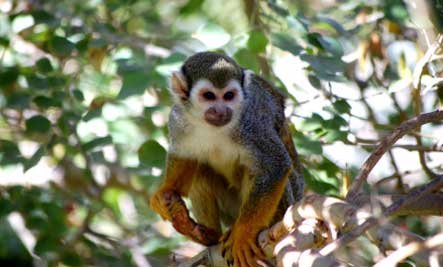
Spider monkeys of the genus Ateles are New World monkeys in the subfamily Atelinae , family Atelidae . Like other atelines , they are found in the tropical forests of Central and South America , from southern Mexico to Brazil . The genus contains seven species , all of which are under threat; The black-headed spider monkey , and brown spider monkey are critically endangered .


Disproportionately long limbs and long prehensile tails make them one of the largest New World monkeys and gives rise to their common name. Spider monkeys live in the upper layers of the rainforest, and forage in the high canopy, from 25 to 30 m (82 to 98 ft).  They primarily eat fruits, but will also occasionally consume leaves, flowers, and insects.  Due to their large size, spider monkeys require large tracts of moist evergreen forests, and prefer undisturbed primary rainforest. They are social animals and live in bands of up to 35 individuals but will split up to forage during the day .

Recent meta-analyzes on primate cognition studies indicated spider monkeys are the most intelligent New World monkeys.  They can produce a wide range of sounds and will "bark" when threatened; other vocalisations include a whinny similar to a horse and prolonged screams. 

They are an important food source due to their large size, they are widely hunted by local human populations; they are also threatened by habitat destruction due to logging and land clearing.  Spider monkeys are susceptible to malaria and are used in laboratory studies of the disease. The population trend for spider monkeys is decreasing; The IUCN Red List lists those species as vulnerable, four species as endangered and two species as critically endangered.


The female chooses a male from her group for mating. Both males and females use "anogenital sniffing" to check their mates for readiness for copulation. The gestation period ranges from 226 to 232 days. Each female bears only one offspring on average, every three to four years.

Until six to ten months of age, infants rely completely on their mothers.Males are not involved in raising the offspring.

A mother carries her infant around her belly for the first month after birth. After this, she carries it on her lower back. The infant wraps its tail around its mother's and tightly grabs her midsection.Mothers are very protective of their young and are generally attentive mothers. They have been seen grabbing their young and putting them on their backs for protection and to help them navigate from tree to tree. They help the more independent young to cross by pulling branches closer together. Mothers also groom their young.

The diets of spider monkeys consist of about 71.4 to 84 percent of fruits and nuts. They can live for long periods on only one or two kinds of fruits and nuts. They eat the fruits of many big forest trees, and because they swallow fruits whole, the seeds are eventually excreted and fertilized by the feces. Studies show the diet of spider monkeys changes their reproductive, social, and physical behavioral patterns. Most feeding happens from dawn to 10 am. Afterward, the adults rest while the young play. Through the rest of the day, they may feed infrequently until around 10 pm. If food is scarce, they may eat insects, leaves, bird eggs, bark and honey.

Spider monkeys have a unique way of getting food: a lead female is generally responsible for finding food sources. If she cannot find enough food for the group, it splits into smaller groups that forage separately.[citation needed.The traveling groups have four to nine animals. Each group is closely associated with its territory. If the group is big, it spreads out.


Spider monkeys form loose groups of 15 to 25 individuals, but can have even 30 to 40.During the day, groups break up into subgroups of two to eight animals. This social structure (fission-fusion) is found in only two other types of primates: chimpanzees and Homo sapiens. The size of subgroups and the degree to which they avoid each other during the day depends on food competition and the risk of predation. The average subgroup size is between 2 to 8 but can sometimes be up to 17 animals. Also less common in primates, females rather than males disperse at puberty to join new groups. Males tend to stick together for their whole lives. Hence, males in a group are more likely to be related and have closer bonds than females. The strongest social bonds are formed between females and their young offspring.


Spider monkeys are diurnal and spend the night sleeping in carefully selected trees. Groups are thought to be directed by a lead female, which is responsible for planning an efficient feeding route each day. Grooming is not as important to social interaction, owing perhaps to a lack of thumbs.

Spider monkeys have been observed avoiding the upper canopy of the trees for locomotion. One researcher speculated this was because the thin branches at the tops of trees do not support the monkeys as well.

At 107 grams (3.8 oz), the spider monkey brain is twice the size of a howler monkey brain of equivalent body size; this is thought to be a result of the spider monkeys' complex social system and their frugivorous diets, which consist primarily of ripe fruit from a wide variety (over 150 species) of plants. This requires the monkeys to remember when and where fruit can be found. The slow development may also play a role: the monkeys may live from 20 to 27 years or more, and females give birth once every 17 to 45 months. Gummy, presumably the oldest living spider monkey in captivity, is presumed to have been born wild in 1962 and currently resides at Fort Rickey Childrens Discovery Zoo located in Rome, NY.


среда, 18. новембар 2015.

ARMADILLO

ARMADILLO


Armadillos are New World mammals with a leathery armour shell.Dasypodidae is the only surviving family in the oder Cingulata, part of the superorder Xenarthra, along with the anteaters and sloths. The word armadillomeans "little armoured one" in Spanish. The Aztecs called them āyōtōchtli , Nahuatl for "turtle-rabbit": āyōtl  (turtle) and tōchtli  (rabbit).
About 10 extant genera and 20 extant spaices of armadillo have been described, some of which are distinguished by the number of bands on their armour. Their average length is about 75 cm (30 in), including tail. The giant armadillo  grows up to 150 cm (59 in) and weighs up to 54 kg (119 lb), while the pink fairy armadillo is a diminutive species, with an overall length of 13–15 cm (5–6 in). All species are native to the Americans, where they inhabit a variety of environments.
Like all other xenarthran lineages, armadillos originated in South America. Due to the continent's former isolation, they were confined there for most of the Cenozoic. The recent formation of the Isthmus of Panama allowed a few members of the family to migrate northward into southern North America by the early Pleistocene, as part of the Great American Interchange.(Some of their much larger cingulate relatives, the pampatheres and glyptodonts, made the same journey.)

Today, all extant armadillo species are still present in South America. They are particularly diverse in Paraguay (where eleven species exist) and surrounding areas. Many species are endangered. Some, including four species of Dasypus, are widely distributed over the Americas, whereas others, such as Yepes's mulita, are restricted to small ranges. Two species, the northern naked-tailed armadillo and nine-banded armadillo, are found in Central America; the latter has also reached the United States, primarily in the south-central states (notably Texas), but with a range that extends as far east as South Carolina and Florida, and as far north as Nebraska and central Indiana. Their range has consistently expanded in North America over the last century due to a lack of natural predators.


Armadillos are small to medium-sized mammals. The smallest species, the pink fairy armadillo, is roughly chipmunk-sized at 85 g (3.0 oz) and 13–15 cm (5.1–5.9 in) in total length. The largest species, the giant armadillo, can be the size of a small pig, weigh up to 54 kg (119 lb) and can be 150 cm (59 in) long. They are prolific diggers. Many species use their sharp claws to dig for food, such as grubs, and to dig dens. The nine-banded armadillo prefers to build burrows in moist soil near the creeks, streams, and arroyos around which it lives and feeds. The diets of different armadillo species vary, but consist mainly of insects, grubs, and other invertebrates. Some species, however, feed almost entirely on ants and termites.


In common with other xenarthrans, armadillos, in general, have low body temperatures of 33–36 °C (91–97 °F) and basal metabolic rates (40–60% of that expected in placental mammals of their mass). This is particularly true of types that specialize in using termites as their primary food source (for example, Priodontesand Tolypeutes).
The armour is formed by plates of dermal bone covered in relatively small, overlapping epidermal scales called "scutes", composed of bone with a covering of horn. Most species have rigid shields over the shoulders and hips, with a number of bands separated by flexible skin covering the back and flanks. Additional armour covers the top of the head, the upper parts of the limbs, and the tail. The underside of the animal is never armoured, and is simply covered with soft skin and fur.

This armour-like skin appears to be the main defense of many armadillos, although most escape predators by fleeing (often into thorny patches, from which their armour protects them) or digging to safety. Only the South American three-banded armadillos (Tolypeutes) rely heavily on their armour for protection. When threatened by a predator, Tolypeutes species frequently roll up into a ball. Other armadillo species cannot roll up because they have too many plates. The North American nine-banded armadillo tends to jump straight in the air when surprised, and consequently often collides with the undercarriage or fenders of passing vehicles.

Armadillos have short legs, but can move quite quickly. The ninebanded armadillo is noted for its movement through water which is accomplished via two different methods: it can walk underwater for short distances, holding its breath for as long as six minutes; also, to cross larger bodies of water, it is capable of increasing its buoyancy by swallowing air, inflating its stomach and intestines.


Armadillos have very poor eyesight, and use their keen sense of smell to hunt for food. They use their claws for digging and finding food, as well as for making their homes in burrows. They dig their burrows with their claws, making only a single corridor the width of the animal's body. They have five clawed toes on their hindfeet, and three to five toes with heavy digging claws on their forefeet. Armadillos have a large number of cheek teeth, which are not divided into premolars and molars, but usually have incisors or canines.


ANATEAR

ANATEAR

Anteater is a common name for the four extant mammal species of the suborderVermilingua (meaning "worm tongue") commonly known for eating ants andtermites. The individual species have other names in English and other languages. Together with the sloths, they are within the order Pilosa. The name "anteater" is also colloquially applied to the unrelated aardvarknumbatechidnaspangolins and some members of the Oecobiidae.

Extant species are the giant anteater Myrmecophaga tridactyla, about 1.8 m (5 ft 11 in) long including the tail; the silky anteater Cyclopes didactylus, about 35 cm (14 in) long; the southern tamandua or collared anteater Tamandua tetradactyla, about 1.2 m (3 ft 11 in) long; and the northern tamandua Tamandua mexicana of similar dimensions.
All anteaters have elongated snouts equipped with a thin tongue that can be extended to a length greater than the length of the head; their tube-shaped mouths have lips but no teeth. They use their large, curved foreclaws to tear open ant and termite mounds and for defense, while their dense and long fur protects them from attacks from the insects. All species except the giant anteater have a long prehensile tail

The anteaters are more closely related to the sloths than they are to any other group of mammals. Their next clGiantosest relations are armadillos. There are four extant species in three genera:
  •  anteater (Myrmecophaga tridactyla)
  • Silky anteater (Cyclopes didactylus)
  • Northern (Tamandua mexicana) and southern tamandua (Tamandua tetradactyla)

Anteater habitats includes dry tropical forests, rainforests, grasslands, and savannas. The silky anteater (Cyclopes didactylus) is specialized to an arboreal environment, but the more opportunistic tamanduas find their food both on the ground and in trees, typically in dry forests near streams and lakes. The almost entirely terrestrial giant anteater (Myrmecophaga tridactyla) lives in savannas. The two anteaters of the genus Tamandua, the southern (Tamandua tetradactyla) and the northern tamanduas (Tamandua mexicana), are much smaller than the giant anteater, and differ essentially from it in their habits, being mainly arboreal. They inhabit the dense primeval forests of South and Central America. The usual colour is yellowish-white, with a broad black lateral band, covering nearly the whole of the side of the body.
The silky anteater (Cyclopes didactylus) is a native of the hottest parts of South and Central America, and about the size of a cat, of a general yellowish color, and exclusively arboreal in its habits.


Silky anteaters and northern tamanduas extend their ranges as far north as southeastern Mexico, while giant anteaters can be found as far north as Central America. Southern tamanduas range south to Uruguay (giant anteaters did also until their recent extirpation there) and the ranges of all species except the northern tamandua overlap in eastern Brazil. Anteaters were confined to South America, which was formerly an island continent, during most of the Cenozoic Era. Once the Isthmus of Panama formed about three million years ago, however, anteaters invaded Central America as part of the Great American Interchange.


Anteaters are specialized to feed on small insects. With each anteater species having its own insect preferences: small species are specialized on arboreal insects living on small branches, while large species can penetrate the hard covering of the nests of terrestrial insects. To avoid the jaws, sting, and other defences of the invertebrates, anteaters have adopted the feeding strategy of licking up large numbers of ants and termites as quickly as possible — an anteater normally spends about a minute at a nest before moving on to another — and a giant anteater has to visit up to 200 nests to consume the thousands of insects it needs to satisfy its caloric requirements. 


The anteater's tongue is covered with thousands of tiny hooks called filiform papillae which are used to hold the insects together with large amounts of saliva. Swallowing and the movement of the tongue are aided by side-to-side movements of the jaws. The tongue is attached to the sternum and moves very quickly, flicking 150 times per minute. The anteater's stomach, similar to a bird's gizzard, has hardened folds and uses strong contractions to grind the insects; a digestive process assisted by small amounts of ingested sand and dirt.


уторак, 17. новембар 2015.

STORK

STORK


Storks are large, long-legged, long-necked wading birds with long, stout bills. They belong to the family Ciconiidae. They are the only family in the order Ciconiiformes, which was once much larger and held a number of families. 


Storks dwell in many regions and tend to live in drier habitats than the closely related heronsspoonbills and ibises; they also lack the powder down that those groups use to clean off fish slime. Storks have no syrinx and are mute, giving nocall; bill-clattering is an important mode of communication at the nest. Many species are migratory. Most storks eat frogsfishinsectsearthworms, small birds and smallmammals. There are nineteen living species of storks in six genera.
Various terms are used to refer to groups of storks, two frequently used ones being a muster of storks and a phalanx of storks.


Storks tend to use soaring, gliding flight, which conserves energy. Soaring requiresthermal air currents. Ottomar Anschütz's famous 1884 album of photographs of storks inspired the design of Otto Lilienthal's experimental gliders of the late nineteenth century. Storks are heavy, with wide wingspans: the marabou stork, with a wingspan of 3.2 metres (10.5 feet) and weight up to 8 kg (18 lbs), joins theAndean condor in having the widest wingspan of all living land birds.


Their nests are often very large and may be used for many years. Some nests have been known to grow to over two metres (six feet) in diameter and about three metres (ten feet) in depth. Storks were once thought to be monogamous, but this is only partially true. They may change mates after migrations, and may migrate without a mate.
Storks' size, serial monogamy, and faithfulness to an established nesting site contribute to their prominence in mythology and culture.


The centres of stork diversity are in tropical Asia and sub-Saharan Africa, with eight and six breeding species respectively. Just three species are present in the New World: wood storkmaguari stork and jabiru, which is the largest flying bird of the Americas. Two species, white and black stork, reach Europe and western temperate Asia, while one species, Oriental stork, reaches temperate areas of eastern Asia, and one species, black-necked stork, is found in Australasia.


A DNA study found that the families ArdeidaeBalaenicipitidaeScopidae and theThreskiornithidae belong to the Pelecaniformes. This would make Ciconiidae the only group.
Storks were distinct and possibly widespread by the Oligocene. Like most families of aquatic birds, storks seem to have arisen in the Palaeogene, maybe 40–50 million years ago (mya). For the fossil record of living genera, documented since theMiddle Miocene (about 15 mya) at least in some cases, see the genus articles.
Though some storks are highly threatened, no species or subspecies are known to have gone extinct in historic times. A Ciconia bone found in a rock shelter on the island of Réunion was probably of a bird taken there as food by early settlers; no known account mentions the presence of storks on the Mascarene Islands.


Within its range the white stork is distinctive when seen on the ground but, when seen at a distance in flight, it can be confused with several other species with similar underwing patterns, such as the yellow-billed storkgreat white pelican and Egyptian vulture. The yellow-billed stork is identified by its black tail and a longer, slightly curved, yellow beak. The white stork also tends to be larger than the yellow-billed stork.The great white pelican has short legs which do not extend beyond its tail, and it flies with its neck retracted, keeping its head near to its stocky body, giving it a different flight profile. Pelicans also behave differently, soaring in orderly, synchronised flocks rather than in disorganised groups of individuals as the white stork does. The Egyptian vulture is much smaller, with a long wedge-shaped tail, shorter legs and a small yellow-tinged head on a short neck. The common crane, which can also look black and white in strong light, shows longer legs and a longer neck in flight.